
In the modern industrial landscape, material handling is no longer viewed as a peripheral support function. Instead, it is recognized as the logistical backbone of any manufacturing or warehousing operation. Efficiently moving, protecting, and storing materials throughout the production cycle directly influences a facility’s ability to scale. When these processes are manual, they often become a source of bottlenecks, high labor costs, and physical strain. Automating these movements allows businesses to shift human talent toward higher-value tasks while ensuring a predictable flow of goods.
Defining Strategic Material Handling
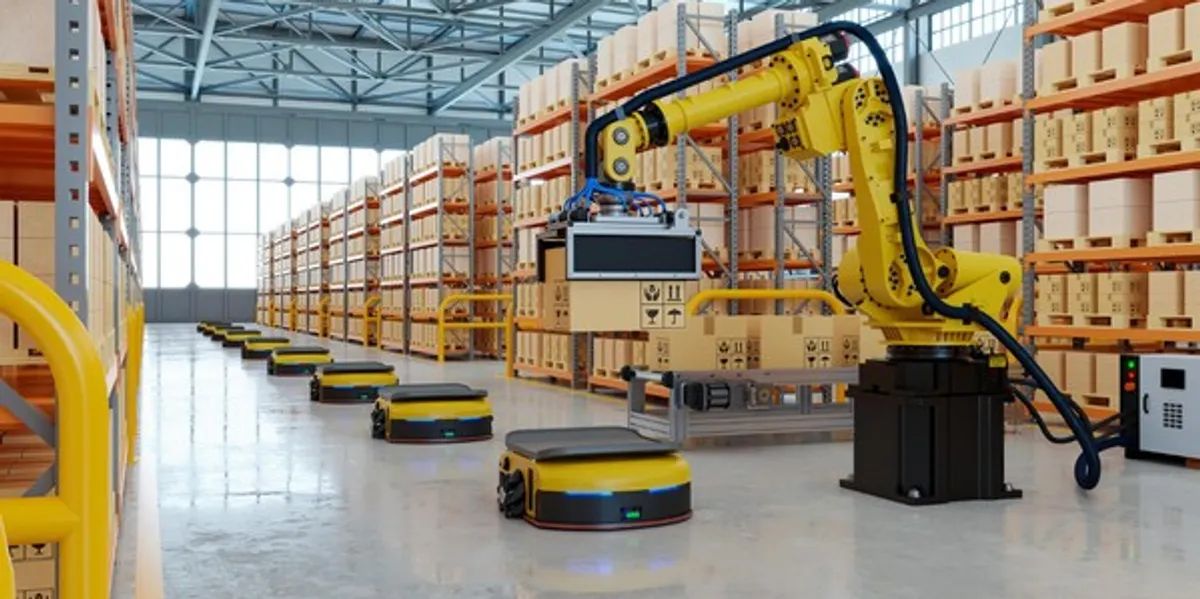
At its core, material handling encompasses the diverse ways products and components travel from receiving, through assembly, and finally to shipping. Its strategic importance lies in its impact on lead times and operational costs. A well-designed handling system minimizes the distance traveled and reduces the “touches” required per item. By introducing a material handling robot into the workflow, companies can achieve a level of synchronization that is difficult to maintain with manual labor alone, particularly during peak demand or multi-shift operations.
Core Processes: From Bulk to Palletizing
Automation requirements vary significantly depending on the specific handling task. Understanding these distinctions is the first step in designing a flexible system:
- Bulk Handling:This involves moving large volumes of unsorted parts or raw materials. Robots equipped with advanced vision systems can identify and pick individual items from a bin (bin picking), feeding them into the production line.
- Kitting:This is a more complex task where multiple different parts are gathered and placed into a single container (a “kit”) for assembly. This requires a robot to navigate between different source locations and handle various geometries with high precision.
- Sorting:This process involves identifying items—often via barcodes or vision sensors—and directing them to specific locations based on destination or product type. Automated sorting is critical in high-speed fulfillment and distribution centers.
- Palletizing:The final stage of many production lines, palletizing involves stacking finished goods onto a pallet in a specific, stable pattern. Collaborative robots (cobots) are particularly effective here, as they can work alongside employees and be easily reprogrammed for different box sizes.
The Role of Collaborative Robots
Collaborative robots have democratized material handling for small and medium-sized enterprises. Unlike traditional industrial robots that require extensive safety fencing and large footprints, cobots can often be integrated into existing floor layouts with minimal disruption.
In kitting and sorting, these robots use specialized end-of-arm tooling, such as vacuum grippers or soft-fingered actuators, to handle delicate items without damage. Their ability to be hand-guided for teaching points means that an automation engineer can adjust the handling path in minutes rather than hours. This flexibility is essential for facilities that handle a high variety of products with low individual volumes.
Measuring Success: Throughput, Accuracy, and Takt Time
To justify the investment in automation, production managers must track specific performance indicators. These metrics provide a baseline for comparing manual performance against robotic output:
- Throughput:This measures the total number of units moved or processed over a specific period. Automation typically provides a steady, uninterrupted throughput that ignores the fluctuations caused by human fatigue or breaks.
- Accuracy:In sorting and kitting, accuracy is paramount. Automated systems significantly reduce “mis-picks” or incorrect shipments, which in turn reduces the costs associated with returns and rework.
- Takt Time:This is the rate at which a finished product must be completed to meet customer demand. Robotic handling ensures that the feeding of parts perfectly matches the takt time of the assembly station, preventing either idle time or overproduction.
Ergonomics and Risk Reduction
One of the most immediate benefits of automating material handling is the improvement in workplace safety. Many handling tasks involve repetitive lifting, twisting, and reaching—actions that are the primary causes of musculoskeletal disorders (MSDs) in manufacturing.
By delegating heavy lifting and repetitive sorting to a robot, a company can drastically reduce its insurance premiums and workers’ compensation claims. Furthermore, robots can operate in environments that are less than ideal for humans, such as cold storage units or areas with high noise levels, without any degradation in performance or safety.
Common Configuration Patterns
Successful material handling setups usually follow one of several proven configuration patterns. The “In-Line” pattern places the robot directly between two conveyor segments to facilitate sorting or inspection. The “Work-Cell” pattern involves a centrally located robot serving multiple machines or stations arranged in a circle.
For palletizing, the “End-of-Line” pattern is the standard, where the robot sits at the final output of the conveyor to stack goods. Each of these patterns requires careful consideration of the robot’s reach, payload capacity, and the speed of the incoming product stream to ensure there is no “starving” or “blocking” of the system.
Guidelines for Planning an Automated System
Before deploying a robotic handling solution, decision-makers should follow a structured planning process. Start by mapping the current manual workflow and identifying the specific points where delays occur. It is often more effective to automate a simple, repetitive movement first rather than attempting to automate a complex, multi-variable task immediately.
Consider the “modularity” of the tooling. A robot that can easily switch between a vacuum gripper and a mechanical gripper will provide a much better return on investment over its lifespan. Finally, ensure that the maintenance team is involved in the planning phase. Understanding the lubrication requirements, sensor calibration, and software updates necessary for the system will ensure long-term reliability and minimize unscheduled downtime.