
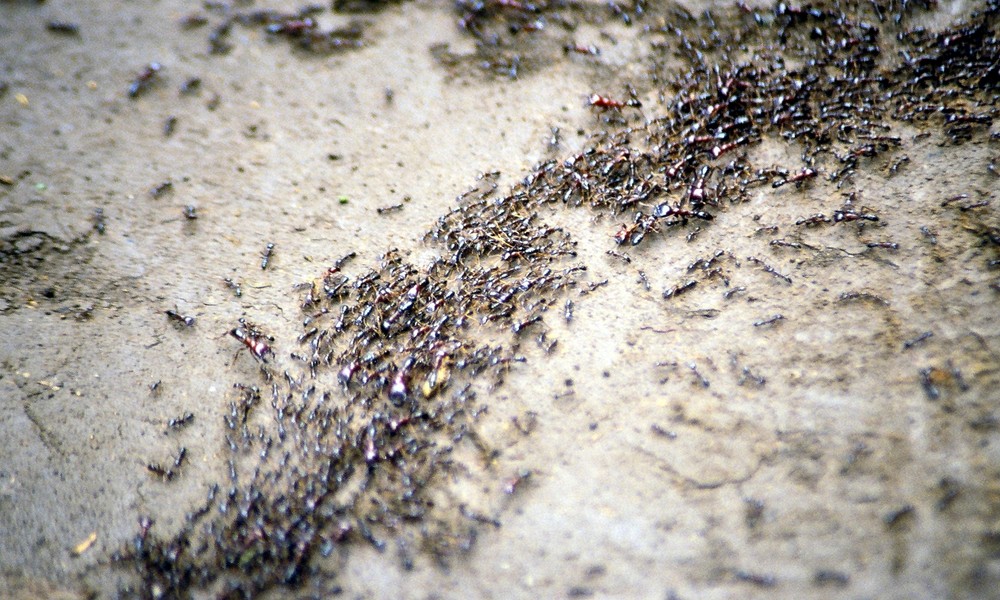
Ant Colony Optimization: Heuristic based on the foraging behaviour of real ants

Ant Colony Optimisation, often called ACO, is a nature-inspired algorithm used to solve complex search and optimisation problems. It is based on how real ants find food and gradually identify efficient paths between their colony and a food source. In computing, this idea is implemented as a heuristic that helps systems choose good solutions from many possible options.
ACO is especially useful when a problem has many combinations and the best answer is not easy to find using simple rules. Examples include route planning, scheduling, network optimisation, and resource allocation. The method does not always guarantee the perfect answer, but it is known for producing strong, practical solutions within a reasonable time.
For learners exploring optimisation methods in an artificial intelligence course in bangalore, Ant Colony Optimisation is an important topic because it demonstrates how biological behaviour can inspire intelligent algorithms. It also helps build a deeper understanding of heuristics, probability, and iterative improvement.
How Ant Colony Optimisation Works in Nature and Computing
Real ant behaviour as the foundation
Real ants move in search of food and leave behind a chemical trail called pheromone. When other ants detect this trail, they are more likely to follow it. If a path leads to food quickly, more ants use it, reinforcing the pheromone trail. Over time, shorter or more efficient paths receive stronger pheromone concentration, while weaker paths fade.
ACO uses the same idea in a mathematical way. Artificial ants are agents that move through possible solution paths. As they move, they evaluate the path quality and leave a virtual pheromone value. Better solutions receive stronger reinforcement, making them more attractive in later iterations.
Core steps in the algorithm
The algorithm generally follows a cycle:
- Create multiple artificial ants.
- Let each ant construct a solution by moving step by step.
- Evaluate the quality of each solution.
- Update pheromone values based on solution quality.
- Reduce pheromone levels through evaporation to avoid over-reliance on early paths.
- Repeat the process for many iterations.
This repeated exploration and reinforcement allow the algorithm to balance the discovery of new paths and the improvement of good ones.
Key Concepts That Make ACO Effective
Pheromone update and evaporation
Pheromone update is central to ACO. If a solution is good, it gets more pheromone. If it is poor, it receives less. Evaporation is equally important because it prevents the system from getting stuck too early on one path. Without evaporation, the algorithm may converge too quickly, missing better solutions.
This balance creates a practical learning process. The ants collectively learn from past iterations, but they still keep some flexibility to explore alternatives.
Heuristic information
ACO often combines pheromone trails with heuristic information. A heuristic is a problem-specific hint that helps ants make better choices. For example, in route optimisation, a shorter distance may be considered more attractive. The ant then chooses paths using both pheromone strength and heuristic desirability.
This combination improves performance because the algorithm uses both experience from previous ants and direct problem knowledge.
Applications of Ant Colony Optimisation in Real Problems
Route optimisation and logistics
One of the most common uses of ACO is route planning, including variants of the travelling salesperson problem. Logistics companies can use similar optimisation methods to reduce delivery distance, fuel usage, and travel time. In traffic systems, ACO-inspired models can support dynamic routing decisions when conditions change.
Scheduling and resource allocation
ACO is also used in production scheduling, job assignment, and timetabling. For example, when multiple tasks must be assigned to limited machines or time slots, the number of combinations can become very large. ACO helps search efficiently through these possibilities and identify workable schedules with lower delays or better resource use.
Network and communication systems
In communication networks, ACO can help find efficient data paths. Since networks often change due to congestion or failures, an adaptive optimisation method is valuable. ACO-based approaches can support robust path selection by continuously updating route quality.
These examples show why ACO remains relevant in AI and optimisation studies. Students who learn such methods in an artificial intelligence course in bangalore can connect theoretical algorithms to practical industry use cases in transport, operations, and computing.
Strengths and Limitations of Ant Colony Optimisation
Strengths
ACO has several practical advantages:
- It works well for complex combinatorial problems.
- It is flexible and adaptable to many domains.
- It supports parallel exploration through multiple ants.
- It improves solutions iteratively and can handle changing environments.
Another strength is interpretability. The pheromone and path selection process provides a clear conceptual model, making it easier for learners to understand than some black-box optimisation methods.
Limitations
- It can be computationally expensive for very large problems.
- Performance depends on parameter tuning, such as pheromone importance and evaporation rate.
- It may converge to a suboptimal solution if exploration is not balanced well.
- It often requires domain-specific heuristics for best results.
Because of these limitations, practitioners usually test multiple parameter settings and compare ACO with other optimisation methods such as genetic algorithms or simulated annealing.
Conclusion
Ant Colony Optimisation is a powerful heuristic inspired by a simple natural behaviour: ants finding efficient paths to food through pheromone trails. In computing, this idea becomes a structured optimisation technique that can solve difficult problems involving routes, schedules, and networks.
Its main strength lies in collective learning, iterative improvement, and a balance between exploration and exploitation. While it requires careful parameter tuning, ACO remains a valuable method in artificial intelligence and operations research. For anyone learning optimisation concepts, understanding ACO offers practical problem-solving insights and a strong example of how nature can shape intelligent algorithm design.